By Illusion Lifestyle Management
Updated
01 — Section
A day along Pampelonne
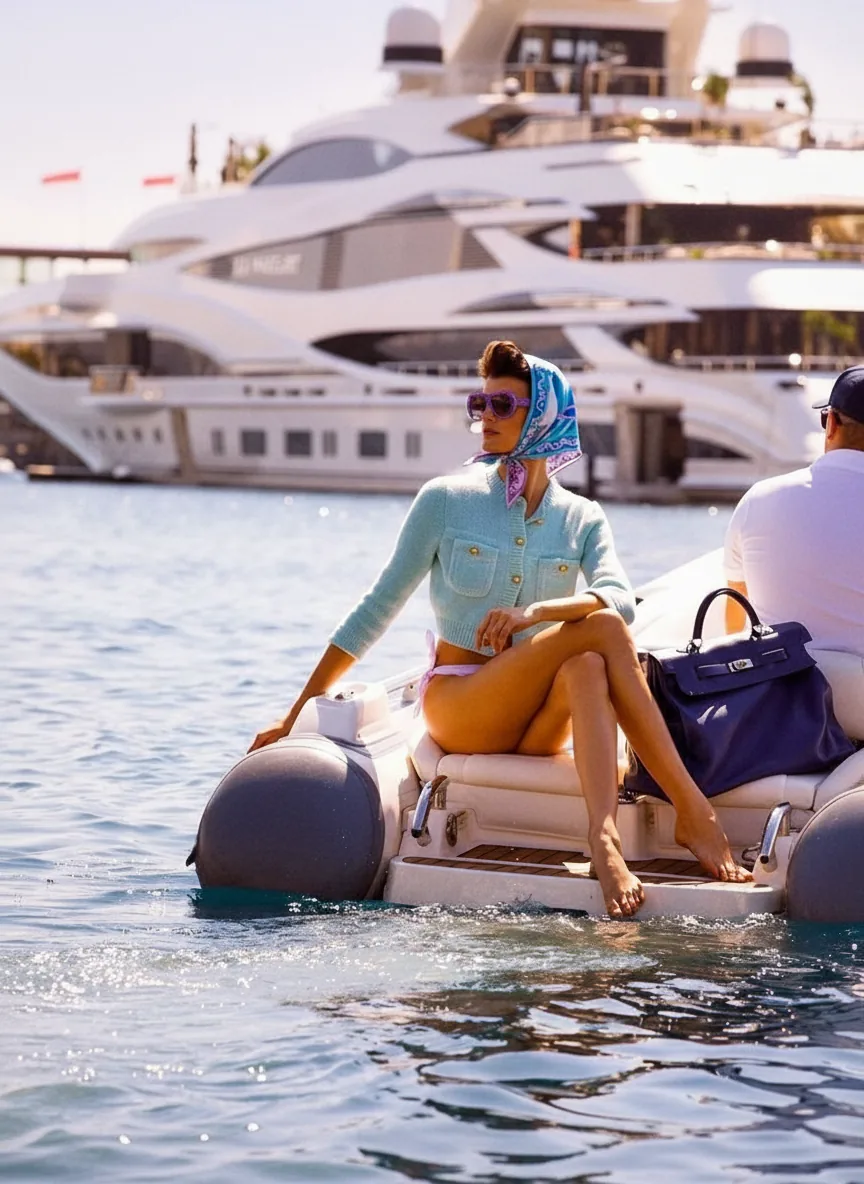
The classic Saint-Tropez day at sea is shorter than people think. Leave the port at eleven, anchor off Pampelonne by noon, lunch on board or at one of the beach clubs by tender, swim through the afternoon, return at sunset. Six hours, well spent.
A day cruiser between fifteen and twenty-five metres is the right scale for this rhythm. Larger vessels exist, but Pampelonne is shallow, the anchorage is busy in season, and a big yacht is awkward for a beach lunch. The sea between the peninsula and the Île d'Or is generally calm in the morning and can chop after three; plan accordingly.
02 — Section
A weekend toward Porquerolles
Three days at sea opens the door to the Îles d'Hyères, Porquerolles, Port-Cros, and Le Levant. From Saint-Tropez, Porquerolles is roughly four to five hours westbound at cruising speed. The crossing is straightforward in settled weather; the reward is one of the last truly quiet anchorages on the French Riviera.
A vessel of thirty to forty metres handles the run comfortably and gives the crew the autonomy to spend the night at anchor in the Calanque de l'Indienne or in the lee of Port-Cros. Day one is the crossing and lunch on Porquerolles; day two is Port-Cros and its protected marine reserve; day three is the return via the Cap Camarat and an evening back in the Gulf of Saint-Tropez.
03 — Section
A week toward Portofino
The full Riviera arc, Saint-Tropez to Portofino and back, is a seven-day rhythm rather than a six-day one. The Ligurian coast does not reward speed. The right itinerary is two nights along the French Riviera (Cannes, Saint-Jean-Cap-Ferrat, or Monaco), one or two nights along the Italian coast at Sanremo or Imperia, two nights in or around Portofino, and the unhurried return.
Vessels of forty metres and above are built for this distance. They allow a stable night passage if the weather closes, full hotel service for the crossing days, and the tender capacity to use Portofino as a hub rather than a stop. The harbour itself is small and famously full; mooring in summer requires advance arrangement, and an alternative anchorage off Paraggi should always be part of the plan.
04 — Section
How vessel size shapes the trip
Under twenty-four metres, a yacht is generally a day boat with overnight capacity. Comfortable for two couples, tight for a family of six. Above twenty-four metres, the vessel can sustain a full week at sea with the right crew. Above forty metres, it becomes a small floating residence, chef, stewardess, tender pilot, and the engineering autonomy to leave port for several days.
The conversation worth having is not 'how big' but 'how many nights at anchor versus in port'. Anchoring is quieter, more private, and weather-dependent. Port nights are easier on the crew and let guests step ashore for dinner. A good week balances both.
05 — Section
A note on crew etiquette
The crew of a private yacht are not staff in the household sense. They are professionals who hold maritime certifications, work in shifts, and are responsible for the safety of the vessel. The relationship is collaborative rather than transactional.
Brief the captain on your priorities at the start of the charter, sleep, gastronomy, watersports, social calendar, and let the crew shape the days around them. The best charters happen when guests trust the captain's reading of the weather and the chef's reading of the local market, rather than imposing a fixed schedule against both.
A service charge, customarily five to fifteen per cent of the charter fee, is given to the captain at the end of the trip and distributed across the crew.
06 — Section
What a Lifestyle Manager arranges around the charter
The vessel and crew are one half of the trip; the rest is the shore. A Lifestyle Manager coordinates the chauffeur to the marina, the helicopter transfer if you are joining from Nice, the table at the restaurant where you tender ashore for dinner, the spa appointment at the hotel where you spend the one port night, and the discreet logistics of provisioning between legs.
It is the difference between a charter and an itinerary that flows.